Challenges and Innovations in European Tunnel and Bridge Construction
Europe's landscape — fractured by mountain ranges, wide river deltas, and dense urban corridors — has always demanded extraordinary engineering. Today, the pressure to connect the continent faster, more sustainably, and more reliably is pushing tunnel and bridge construction into genuinely new territory. The projects being planned and built right now are not just bigger than their predecessors; they are more complex in almost every dimension.
The Scale and Strategic Importance of European Infrastructure Projects
European tunnel and bridge construction is a continental priority, driven by the TEN-T (Trans-European Transport Network) policy framework, which targets seamless multimodal connectivity across all EU member states by 2050. The TEN-T core network corridors — linking major economic hubs from Scandinavia to the Iberian Peninsula — depend heavily on fixed links through or over terrain that roads and railways cannot simply bypass.
The strategic logic is straightforward: every hour saved on a freight corridor between, say, Hamburg and Palermo translates into measurable economic value. But the engineering required to deliver those savings is anything but straightforward. Projects like the Brenner Base Tunnel connecting Austria and Italy, or the planned fixed link across the Strait of Messina, illustrate how ambition and complexity scale together.
For infrastructure professionals and policymakers alike, understanding what makes these projects difficult — and what is changing — matters well beyond any single construction site.
Major Engineering Challenges in Tunnel Construction
Tunnel construction in Europe is primarily a battle with geology. Geotechnical engineering sits at the core of every major tunneling project, and the Alpine arc in particular presents conditions that can shift dramatically within a few hundred meters — from hard granite to water-saturated fault zones to swelling clays.
Tunnel Boring Machines (TBMs) have become the dominant excavation method for long-distance tunnels, but they are not a universal solution. In heterogeneous ground, TBM performance can drop sharply, and cutter head wear becomes a serious operational and cost variable. Maintenance interventions deep underground — sometimes under compressed air — carry significant safety risks and schedule implications.
Groundwater management adds another layer of difficulty. High-pressure inflows can halt a TBM drive entirely, requiring grouting campaigns that take weeks. In urban environments, groundwater drawdown also threatens surface structures and ecosystems, creating both engineering and regulatory problems simultaneously.
The operational demands placed on TBMs in Alpine tunnels — continuous drives of 10 km or more, at depths exceeding 1,000 meters — push the machines and their crews to sustained limits that shorter urban tunnels do not require. Logistics chains for spoil removal, segment delivery, and crew rotation become critical project management disciplines in their own right.
Bridge Construction Challenges Across Europe's Diverse Terrain
Bridge engineering across Europe faces a dual challenge: building new crossings over demanding terrain while also managing a large and aging existing stock. The European bridge inventory includes thousands of structures from the postwar construction boom, many now approaching or exceeding their original design life.
Seismic resilience is a non-negotiable design parameter across the Alpine arc, the Apennines, and much of Southern and Southeastern Europe. Modern seismic design philosophy has moved beyond simply preventing collapse — it now aims for structures that remain functional after significant seismic events, which demands more sophisticated isolation systems and ductile detailing than older codes required.
Wind loading presents a separate but equally serious challenge for long-span bridges in coastal and mountain settings. The aerodynamic behavior of a suspension or cable-stayed bridge with a main span exceeding 1,000 meters is not something that can be resolved purely by calculation — it requires wind tunnel testing and, increasingly, computational fluid dynamics modeling to validate design choices.
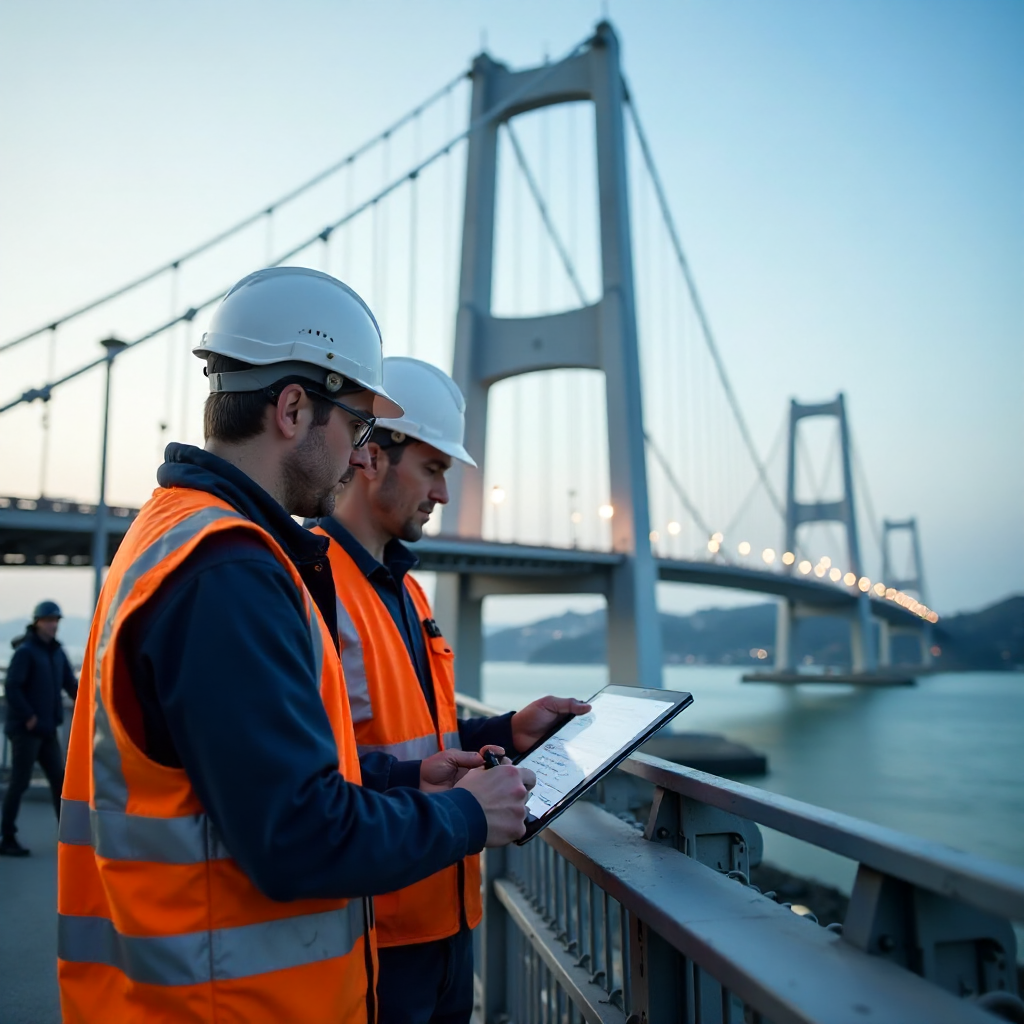
Span engineering for crossings over wide estuaries or deep fjords also confronts the practical limits of construction methodology. Incremental launching, balanced cantilever, and float-in techniques each carry specific risk profiles depending on weather windows, water depth, and access constraints.
Cross-Border Coordination and Regulatory Complexity
Multi-country infrastructure projects face governance challenges that have no parallel in single-nation construction. When a tunnel crosses from one EU member state to another, it enters two distinct legal systems, two sets of technical standards, and often two different procurement cultures — all of which must be reconciled within a single project structure.
Environmental impact assessment (EIA) requirements illustrate the difficulty well. Each country applies its own EIA legislation, even where EU Directives set minimum standards. A project that clears environmental approval in one jurisdiction may face additional requirements — or a completely different review timeline — on the other side of the border. Coordinating parallel EIA processes while keeping a project schedule intact is a significant planning challenge.
Funding adds further complexity. The Connecting Europe Facility (CEF) provides grants for TEN-T projects, but EU funding typically covers only a portion of total costs, with the remainder sourced from national governments and, increasingly, private capital. Aligning the reporting requirements, audit standards, and disbursement timelines of multiple funders — while managing active construction — requires dedicated financial governance structures that many project organizations underestimate.
Stakeholder alignment across national boundaries is a slower process than it looks on paper. Communities on either side of a border crossing may have different priorities, different political contexts, and different expectations about consultation. Projects that treat cross-border stakeholder engagement as a checkbox exercise tend to encounter resistance that surfaces at the worst possible moment.
Technological Innovations Transforming the Sector
The most significant shift in European tunnel and bridge construction over the past decade is the move from paper-based coordination to fully integrated digital workflows. BIM (Building Information Modelling) is now a contractual requirement on many major European infrastructure projects, and its impact on design coordination, clash detection, and construction sequencing is measurable — reducing design errors that previously only surfaced on site.
BIM's value extends beyond design. When linked to construction schedules and cost data, a BIM model becomes a live project management tool, allowing teams to simulate construction sequences and identify logistical conflicts before they become expensive field problems. For tunnels with complex fit-out requirements — ventilation, drainage, fire suppression, rail systems — this kind of integrated coordination is not a luxury; it is a practical necessity.
TBM automation is advancing in parallel. Modern machines incorporate real-time ground condition monitoring, automated steering correction, and predictive maintenance alerts based on sensor data from cutter heads and drive systems. The goal is not to remove human judgment from tunneling, but to give operators better information faster.
Structural health monitoring (SHM) is changing how Europe manages its existing bridge stock. Distributed sensor networks — measuring strain, vibration, temperature, and displacement continuously — allow bridge owners to move from calendar-based inspection regimes to condition-based maintenance. The economic case is compelling: early detection of structural deterioration is consistently cheaper than reactive repair, and SHM data also supports evidence-based decisions about load restrictions or operational changes. More on digital infrastructure monitoring approaches can be found through resources like the American Society of Civil Engineers, whose technical publications on SHM are widely referenced in European practice.
Drone-based inspection is complementing SHM by enabling rapid visual surveys of elements that are difficult or expensive to access by conventional means — bridge deck soffits, tall pylon faces, tunnel portals. When drone imagery is processed through photogrammetry software, it produces measurable 3D records of surface condition that support quantitative deterioration tracking over time.
Sustainability and the Push for Greener Construction
European infrastructure construction is under real pressure to reduce its environmental footprint, and the EU Green Deal has made that pressure structural rather than voluntary. Low-carbon concrete — using supplementary cementitious materials like fly ash, slag, or calcined clay to replace a portion of Portland cement clinker — is the most immediate lever available, given that cement production accounts for roughly 7–8% of global CO₂ emissions.
The challenge is that infrastructure concrete specifications have historically been conservative, for good reason: tunnel linings and bridge decks operate in aggressive environments over design lives of 100 years or more. Convincing asset owners and certifying bodies to accept lower-carbon mix designs requires robust durability data, and building that evidence base takes time.
Circular material use is gaining traction in bridge rehabilitation projects, where reclaimed steel and recycled aggregate can reduce embodied carbon without the performance uncertainty associated with novel binders. Some projects are also redesigning temporary works to minimize material consumption — a less visible but cumulatively significant source of waste in large construction programs.
Ecological disruption during construction is a growing focus of environmental impact assessment practice. Projects crossing river corridors or sensitive habitats are increasingly required to develop detailed ecological management plans covering construction timing, sediment control, and habitat restoration — not just as regulatory compliance, but as genuine project risk management, since ecological objections have delayed or reshaped multiple European infrastructure projects in recent years.
Financing Megaprojects — Models and Pressures
Public-Private Partnerships (PPP) remain a primary financing model for large European infrastructure projects, particularly where toll revenue or availability payments can provide a bankable revenue stream over a concession period of 25–40 years. The model works well when traffic forecasts are reliable and political risk is low — conditions that are harder to guarantee on cross-border projects with long development timelines.
Cost overruns are a persistent feature of infrastructure megaprojects globally, and European tunnel and bridge projects are not immune. The causes are well-documented: optimism bias in early-stage cost estimates, scope changes driven by evolving regulatory requirements, unforeseen ground conditions, and the compounding effect of schedule delays on financing costs. Projects that build in robust contingency reserves and independent cost review mechanisms consistently perform better than those that treat contingency as a negotiating variable to be minimized at contract award.
CEF grants from the European Commission provide a critical anchor for TEN-T projects, but they come with reporting obligations and co-financing requirements that add administrative load to already complex project organizations. The interaction between EU grant conditions and national procurement rules can create genuine legal ambiguity that requires specialist advice to navigate.
Long-duration projects — those spanning 10 to 20 years from planning consent to opening — face a specific financial governance challenge: the organizations, political contexts, and even the technical standards that were current at project inception may have changed substantially by the time construction is complete. Building adaptive governance structures that can absorb these changes without losing project coherence is one of the less-discussed but most important skills in European infrastructure delivery.
Frequently Asked Questions
What is the longest tunnel currently under construction in Europe?
The Brenner Base Tunnel, connecting Innsbruck in Austria with Fortezza in Italy, is among the longest railway tunnels under construction in Europe, with a total tunnel system length of approximately 230 km including access and exploratory tunnels. When complete, its main running tunnels will stretch around 55 km, making it one of the longest rail tunnels in the world.
How does BIM improve safety and efficiency in tunnel projects?
BIM improves safety by enabling design teams to identify clashes between structural, mechanical, and electrical systems before construction begins, reducing the risk of improvised field modifications that can compromise structural integrity. Efficiency gains come from coordinated scheduling, reduced rework, and the ability to simulate construction sequences in advance — particularly valuable in confined tunnel environments where sequencing errors are costly to reverse.
What EU funding sources support cross-border bridge and tunnel projects?
The primary EU funding instrument for cross-border infrastructure is the Connecting Europe Facility (CEF), which provides grants for projects on the TEN-T core and comprehensive networks. The European Investment Bank (EIB) also provides long-term loans for eligible infrastructure projects. Some projects access Cohesion Fund or European Regional Development Fund (ERDF) resources, depending on the economic classification of the regions involved.
How are European construction projects addressing their carbon emissions?
Projects are reducing embodied carbon through low-carbon concrete mixes, recycled steel, and optimized structural design that minimizes material use. Operational emissions during construction are being addressed through electrification of site equipment, renewable energy supply to tunnel drives, and fuel efficiency requirements in contractor specifications. EU taxonomy regulations are also beginning to influence how infrastructure assets are classified for green financing purposes.
What causes delays and cost overruns in European infrastructure megaprojects?
The most common causes are unforeseen geotechnical conditions, which affect both tunnel and foundation work; scope changes driven by regulatory or political developments during long project timelines; optimism bias in original cost and schedule estimates; and the coordination complexity inherent in multi-country, multi-stakeholder projects. Procurement disputes and contractor insolvencies have also caused significant delays on several high-profile European projects in recent years.