How EU Funding Shapes Cross-Border Infrastructure Development
Cross-border infrastructure sits at the heart of the European single market. A rail corridor connecting Warsaw to Berlin, an electricity interconnector linking the Iberian Peninsula to France, a fibre backbone running through the Western Balkans — none of these projects can be funded, planned, or governed by a single member state acting alone. EU-level financing exists precisely because national budget logic and national political cycles create structural gaps at borders.
Why Cross-Border Infrastructure Needs EU-Level Financing
The core problem is that cross-border infrastructure generates benefits that spill across national boundaries, but the costs fall on specific national budgets. No country captures the full return on its investment, so each has an incentive to underinvest — a classic public-goods dilemma that purely national financing cannot resolve.
Consider a rail upgrade on one side of a border. It only delivers full value when the connecting section on the other side is also upgraded. Without a coordinating authority and shared financing, both sides wait for the other to move first. The result is decades of delay and a fragmented network that serves no one well.
The European Commission, through directorates like DG MOVE and DG REGIO, provides the institutional framework that breaks this deadlock. EU funding introduces a shared financial stake in project completion, aligns planning horizons across member states, and attaches governance conditions that force coordination. The result is not just money — it is a mechanism for collective action that national governments cannot replicate bilaterally at scale.
The Main EU Funding Instruments Explained
EU financing for cross-border infrastructure flows through four primary channels, each with a distinct purpose, eligibility logic, and risk profile.
Connecting Europe Facility (CEF)
The Connecting Europe Facility is the most targeted instrument. It provides grants specifically for transport, energy, and digital infrastructure along pre-defined European network corridors. CEF grants do not require repayment, which makes them particularly valuable for capital-intensive projects with long payback periods or limited commercial revenue. Access is competitive — project promoters submit proposals to the European Climate, Infrastructure and Environment Executive Agency (CINEA), which scores applications against technical maturity, cross-border impact, and alignment with EU policy objectives.
Cohesion Fund and ERDF
The Cohesion Fund, alongside the European Regional Development Fund, targets member states and regions where GDP falls below EU averages. For cross-border infrastructure, these funds are particularly active in Central and Eastern Europe, where connectivity gaps are largest and national co-financing capacity is most constrained. Unlike CEF, Cohesion Fund allocations are negotiated through national partnership agreements rather than open competition, which changes both the access route and the project selection logic.
Interreg Programmes
Interreg is frequently underestimated by infrastructure professionals focused on large capital projects. These programmes specifically support cross-border cooperation between regions — often funding feasibility studies, joint planning exercises, capacity building, and pilot infrastructure at smaller scale. Interreg A programmes cover adjacent border regions; Interreg B covers transnational cooperation across wider geographic areas. For early-stage cross-border projects, Interreg funding can prepare the groundwork that makes a later CEF application viable.
European Investment Bank Financing
The European Investment Bank operates differently from grant programmes. It provides long-term loans at preferential rates, blended financing structures, and advisory support through InvestEU. EIB financing suits projects with a revenue stream — toll roads, energy interconnectors, broadband networks — where repayment is feasible but commercial lending terms are prohibitive given project duration and risk. The EIB also acts as a quality signal: its involvement in a project often attracts additional private co-financing.
How the TEN-T and TEN-E Frameworks Set Priorities
The Trans-European Networks — TEN-T for transport and TEN-E for energy — function as the strategic map that directs where EU funding flows. Being inside these frameworks is not just a designation; it is a funding prerequisite for most CEF grants and a significant advantage for EIB financing.
TEN-T organises Europe's transport network into a Core Network, which must meet high-performance standards by 2030, and a Comprehensive Network with a 2050 horizon. Nine core corridors structure the investment logic, each connecting major economic centres across multiple member states. Projects on these corridors receive priority in funding calls, and member states are legally obligated to implement the network standards — which adds planning certainty that purely voluntary cooperation cannot provide.
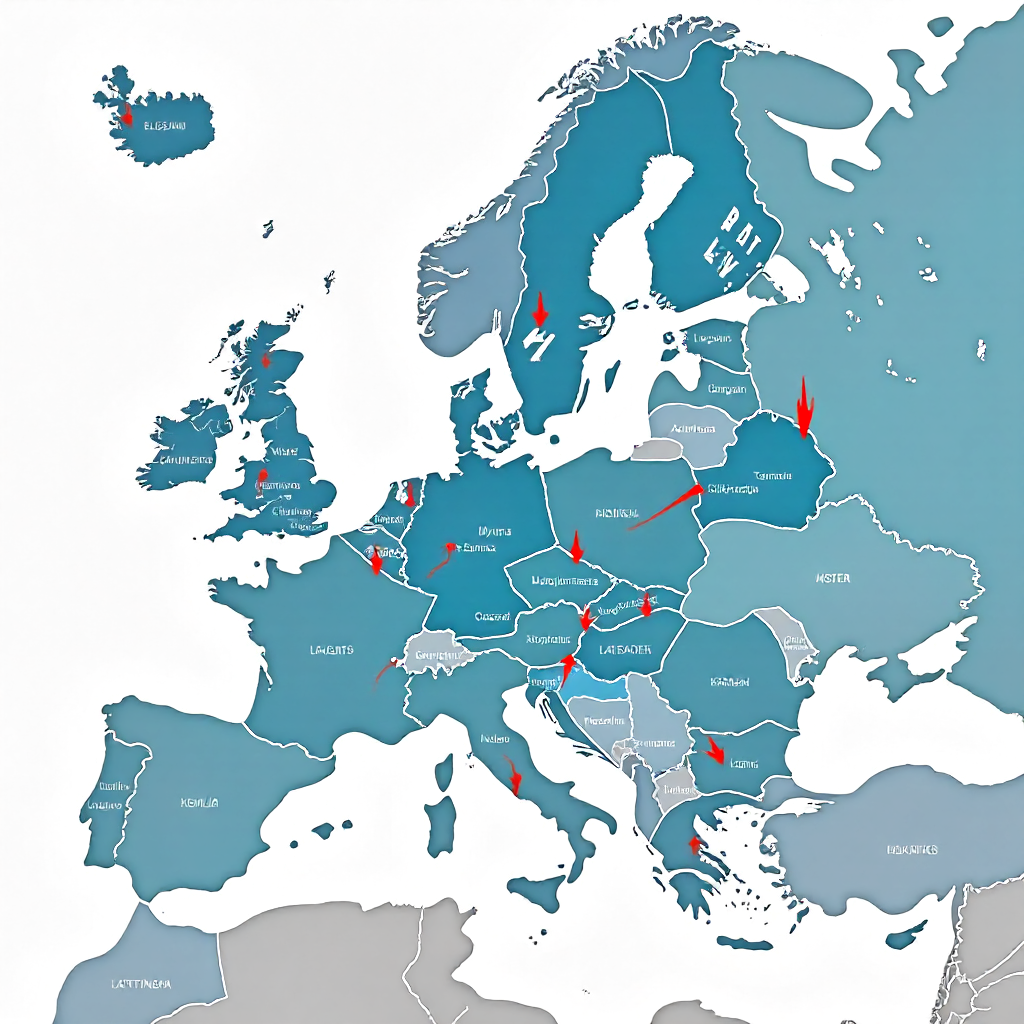
TEN-E governs energy infrastructure, including electricity interconnectors, hydrogen pipelines, and smart grid projects. The Project of Common Interest designation under TEN-E is particularly significant: PCI status grants projects streamlined permitting, access to CEF energy grants, and eligibility for cross-border cost allocation — meaning the costs can be shared between the countries that benefit, not just the country where physical infrastructure is built.
The corridor logic behind both frameworks matters because it forces sequential thinking. A single missing link in a corridor can degrade the value of investments made by multiple member states. EU funding prioritisation creates pressure to close those gaps rather than fund politically convenient but strategically peripheral projects.
Eligibility, Co-Financing, and Governance Conditions
EU grants cover a share of eligible project costs — not the full amount. The co-financing rate varies by instrument and project type, and understanding this ratio is essential for project design from the earliest stages.
For TEN-T core network projects under CEF, EU grants typically cover up to 30% of eligible costs for works, though studies and preparatory actions can attract higher rates. In cohesion-eligible regions, CEF co-financing rates can reach 85% for specific project categories. Cohesion Fund contributions follow different ratios negotiated in the relevant operational programmes, often covering 70–85% in less-developed regions.
These ratios shape everything. A project team that designs infrastructure assuming 85% EU coverage, then discovers the applicable rate is 30%, faces a funding gap that can collapse the entire financing structure. Getting the co-financing assumption right at the feasibility stage is not administrative detail — it is the foundation of project viability.
Governance requirements add another layer. Cross-border projects must demonstrate a genuine partnership structure — typically formalised through a joint project agreement or an intergovernmental memorandum. Both member states must be signatories to the application, and the implementation arrangements must specify which entity manages which section, how cost overruns are shared, and how disputes are resolved. EU state aid rules apply throughout: any public support must be compatible with competition law, which matters particularly when private operators are involved.
From Application to Implementation: How the Process Works
The lifecycle of an EU-funded cross-border infrastructure project typically runs through five stages, each carrying its own timeline and failure risks.
- Project identification and pre-feasibility — Often supported through Interreg or technical assistance funds. This stage produces the strategic case and initial cost estimates needed for a formal proposal.
- Application and evaluation — CEF calls are published by CINEA, with evaluation periods of six to twelve months. Cohesion Fund projects follow operational programme procedures, which vary by member state.
- Grant agreement and financing plan — Once approved, a grant agreement is signed. At this point, the full co-financing stack must be confirmed, including national contributions and any EIB or private lending.
- Permitting and procurement — This is where most delays occur. Cross-border projects require permits in two or more legal jurisdictions, often with different environmental assessment procedures and procurement rules. Synchronising these processes is routinely underestimated.
- Construction, monitoring, and reporting — EU funding comes with mandatory reporting milestones and audit exposure throughout the implementation period, which typically spans five to ten years for major infrastructure.
Delays at the permitting stage are the single most common cause of cost overruns and funding extensions. Projects that invest early in joint environmental impact assessment procedures — aligning national requirements rather than running parallel processes — consistently move faster than those that treat permitting as a sequential national task.
Challenges and Limitations of EU-Funded Cross-Border Projects
EU funding does not eliminate the difficulty of cross-border infrastructure — it reshapes it. The coordination problems that make EU financing necessary also make EU-funded projects structurally more complex than domestic ones.
Administrative burden is substantial. Dual reporting obligations, translation requirements, compatibility between national accounting systems, and differing interpretations of eligible costs across member states all consume project management capacity. Smaller member states and regions often lack the specialist staff to manage this burden alongside actual construction oversight.
Absorption capacity — the ability to actually spend allocated funds within the programme period — is a persistent issue, particularly in cohesion-eligible regions. Funds that are committed but not disbursed by programme deadlines can be decommitted, creating pressure to accelerate spending in ways that compromise project quality or governance.
Differing national legal frameworks create genuine technical problems. Two countries may have incompatible technical standards for rail gauge, voltage systems, or road design specifications — and reconciling these requires regulatory negotiation that no amount of EU funding directly resolves. The Multiannual Financial Framework sets the budget ceiling for seven-year cycles, but political shifts within that period can affect national co-financing commitments, leaving EU-funded projects exposed when a partner government changes priorities.
The Outlook: Infrastructure Funding Priorities in the Current MFF
The current Multiannual Financial Framework reflects a significant shift in EU infrastructure priorities. Energy transition corridors, hydrogen infrastructure, and cross-border digital networks have moved from peripheral to central in both TEN-E revisions and CEF funding calls.
The revised TEN-E regulation, which came into force in 2022, formally removed support for new natural gas infrastructure and redirected PCI eligibility toward offshore renewable energy grids, smart electricity networks, and hydrogen corridors. This reorientation is already visible in funding call priorities: offshore grid interconnectors in the North Sea and Baltic, cross-border hydrogen pipelines in the Iberian Peninsula and North Africa corridor, and smart grid investments linking national systems are all active areas of CEF energy grant allocation.
For digital infrastructure, the EU's Digital Decade targets — 100% gigabit connectivity and 5G coverage across all populated areas by 2030 — are creating demand for cross-border backbone investments that CEF digital funding is beginning to address, though at smaller scale than transport and energy envelopes.
Resilience and dual-use infrastructure have also entered the funding calculus following geopolitical developments since 2022. Rail freight corridors, port infrastructure, and energy storage projects that serve both civilian and security purposes are receiving renewed attention in how DG MOVE and DG REGIO prioritise within their funding windows.
Frequently Asked Questions
What is the difference between CEF grants and EIB loans for infrastructure?
CEF grants are non-repayable contributions covering a portion of eligible project costs, suited to infrastructure with limited commercial revenue. EIB loans must be repaid with interest — though at below-market rates — making them appropriate for projects with a revenue stream. Many large-scale projects combine both: a CEF grant reduces the financing gap, while an EIB loan covers the remaining capital requirement at terms that commercial banks cannot match for 20–30 year infrastructure debt.
Can non-EU neighbouring countries participate in cross-border infrastructure funding?
Yes, with conditions. Western Balkans countries, Ukraine, and other neighbourhood countries can participate in specific CEF and TEN-T extension projects under pre-accession or neighbourhood instruments. Interreg IPA (Instrument for Pre-Accession Assistance) programmes also support cross-border cooperation between EU member states and candidate countries. However, the funding rules, co-financing rates, and governance requirements differ from those applying to full member states.
What co-financing rate does the EU typically cover for TEN-T core network projects?
For works on the TEN-T core network, CEF grants typically cover up to 30% of eligible costs. For studies and preparatory actions, rates can reach 50%. Projects in cohesion-eligible regions may access higher rates — up to 85% — through the cohesion envelope within CEF. The exact rate depends on the funding call, project category, and the applicant's eligibility status.
How long does it typically take to receive EU funding approval for a cross-border project?
From submission to grant agreement signature, CEF competitive calls typically take twelve to eighteen months. This covers evaluation, negotiation, and legal finalisation. Cohesion Fund projects follow operational programme procedures, which can be faster or slower depending on the member state's programme management authority. The pre-application phase — developing a project to submission-ready maturity — commonly takes two to four years for major infrastructure.
What happens to EU funding if a member state withdraws from a joint project?
Withdrawal by one partner triggers a review under the grant agreement terms. In most cases, the remaining partner cannot continue under the original grant conditions, since the cross-border element is a core eligibility criterion. The European Commission may require partial or full recovery of disbursed funds. Projects can sometimes be restructured — bringing in a substitute partner or redefining the project scope — but this requires formal amendment procedures and is not guaranteed. The risk of partner withdrawal is one reason why intergovernmental agreements formalised before grant application are considered essential governance practice.