Renewable Energy Infrastructure in Europe: Wind, Solar, and Hydro Projects
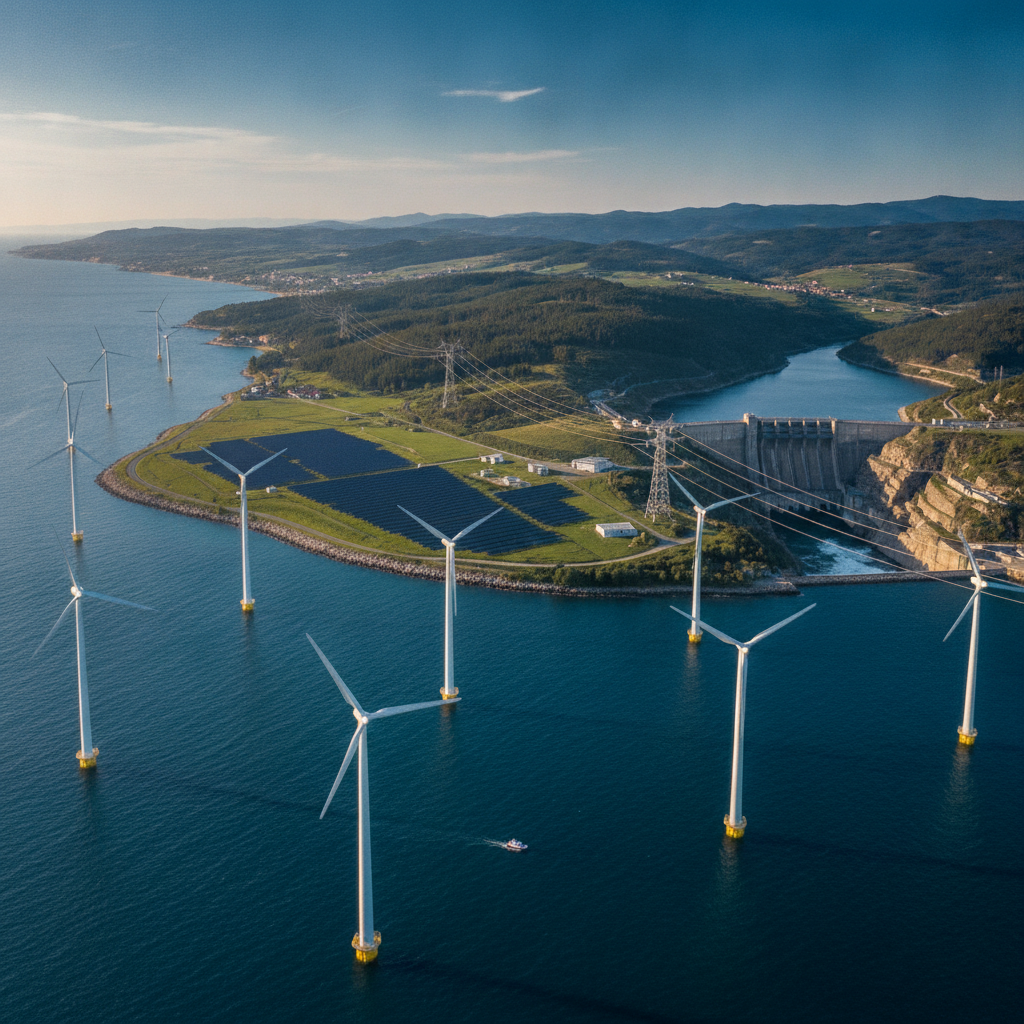
Renewable energy infrastructure in Europe spans offshore wind farms in northern seas, solar photovoltaic (PV) parks across sunnier regions, and hydropower plants connected to rivers and reservoirs. Each project depends on more than its generators: substations, transmission lines, storage, permits, and environmental safeguards determine how renewable electricity reaches homes and businesses.
Europe is not one uniform development market. Geography, planning rules, grid capacity, and the existing power system vary by country and region. Understanding those differences helps explain why similar technologies can follow very different paths from proposal to operation.
Europe’s renewable energy infrastructure at a glance
Europe’s renewable energy infrastructure combines wind, solar, and hydropower generation with electricity transmission grids, storage, and interconnection. These parts work together to move electricity from resource-rich areas to places where demand is higher, while balancing supply that can change with weather and water conditions.
An onshore wind farm may connect through a local substation to a high-voltage transmission network. An offshore wind farm needs additional equipment at sea and on the coast, while a solar PV park typically uses inverters and transformers to deliver power at the voltage required by its connection point. Hydropower plants can generate electricity from flowing or stored water, with some facilities able to adjust output to support system balancing.
Grid connection is a project in its own right. Developers must identify a suitable connection point and determine whether the network can accept the planned output. Where local capacity is limited, new transmission lines, upgraded substations, energy storage, or grid interconnection with another region may be needed. Those additions can take separate planning and permitting, and they may not be ready when the generation site is complete.
Renewables therefore fit into Europe’s broader energy transition through a chain of infrastructure, rather than as isolated power plants. The European Commission’s overview of energy infrastructure describes the wider networks that support energy movement and cross-border connections.
Wind projects on land and at sea
Wind projects turn moving air into electricity, but onshore and offshore wind farms need different foundations, access systems, and grid connections. Both rely on turbines and substations; offshore projects add marine construction and export cables, while land-based projects depend on roads, crane access, and local transmission capacity.
Onshore wind farms
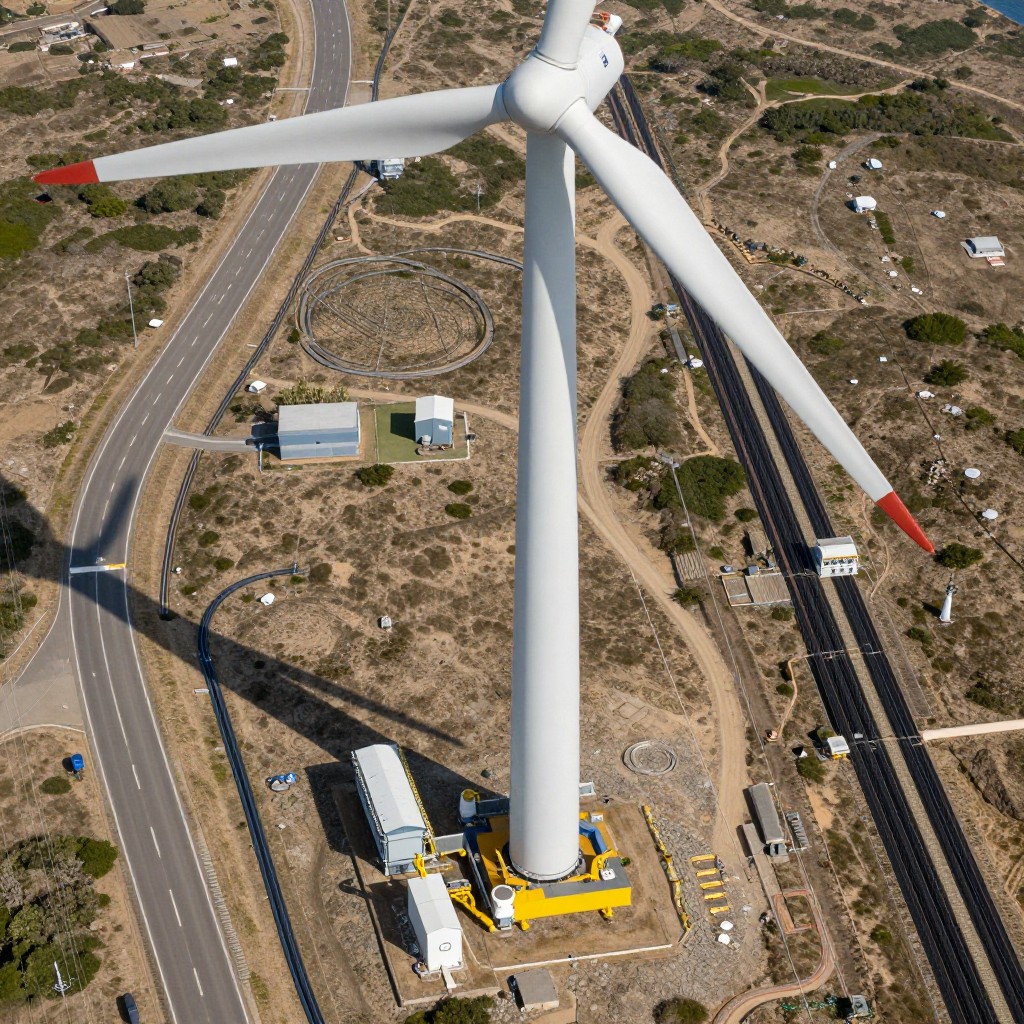
Onshore wind infrastructure includes turbine towers, blades, foundations, access roads, underground or overhead collector cables, and a substation. Turbine locations must account for wind conditions, ground stability, nearby homes, aviation and radar constraints, and environmental impacts. Roads need to accommodate large components and construction equipment, which can make transport routes a practical siting issue even before construction begins.
Land-based wind can be relatively close to existing roads and grids, but available sites may be constrained by settlements, protected habitats, landscape concerns, or competing land uses. A project’s layout can also affect output and noise, so setbacks and turbine spacing matter as much as the headline site area.
Offshore wind farms
Offshore wind farms use turbines fixed to the seabed or, in suitable locations, floating platforms. Their infrastructure includes foundations or floating structures, inter-array cables, offshore substations, export cables, and a landfall connection to the onshore grid. Installation and maintenance require ports, specialized vessels, and weather-dependent marine operations.
Offshore locations can access strong winds and avoid some land-use conflicts, but projects face higher logistical complexity and competing demands on sea space. Shipping, fishing, defense, marine habitats, and existing cables all influence where turbines and routes can go. A wind farm’s electricity still depends on the capacity of the coastal grid to carry power onward.
Solar parks and distributed solar
Solar PV projects convert sunlight into electricity using panels, inverters, and electrical connections. Utility-scale solar parks concentrate many panels on a single site, while distributed solar places smaller systems on rooftops, parking structures, or other built surfaces closer to electricity users.
A solar park needs panel mounting structures, access paths, cabling, inverters that convert direct current to grid-compatible alternating current, transformers, and a connection to the distribution or transmission network. Developers assess sunlight, land conditions, drainage, glare, access, and connection options. Agricultural land, biodiversity, and local views can shape site design and community response.
Distributed solar changes where generation enters the system. Rooftop systems can reduce the need for new land and produce power near demand, but they connect at many points across local distribution networks. That can require upgraded transformers, monitoring, and careful management of voltage and reverse power flows. A large solar park has a more concentrated connection and may be simpler to manage as a single generating site, though it can require more land and dedicated grid infrastructure.
Solar output varies with daylight and weather. Batteries can store some electricity for later use, but storage adds cost, equipment, and operational decisions; it does not remove the need for transmission capacity or other sources of flexibility. The right design depends on local network conditions and the hours when electricity is most valuable.
Hydropower’s role in the renewable mix
Hydropower plants generate electricity from moving or falling water, using infrastructure such as dams, reservoirs, turbines, generators, and water channels. Depending on plant design and water availability, hydropower can provide steady generation, flexible output, or both.
Run-of-river plants use the natural flow of a river, usually with limited water storage. Reservoir hydropower stores water behind a dam and can release it through turbines when electricity is needed. Pumped-storage facilities move water between reservoirs at different elevations: they consume electricity to pump water uphill and generate power when it flows back down. Pumped storage is a form of energy storage, not a net source of primary energy.
Hydropower’s infrastructure is closely tied to water management. Dams and operating rules can affect river flow, fish migration, sediment movement, wetlands, and downstream communities. Reservoirs may also serve functions such as flood management or water supply, but those uses can conflict with electricity production, particularly during drought or competing seasonal demand.
Europe’s hydropower potential and constraints differ widely by basin and terrain. Many suitable sites are already developed, while new projects face environmental review and strong local considerations. Upgrading turbines or controls at an existing plant may improve performance, but it still requires attention to ecological conditions and water-use obligations.
From project site to electricity grid
A renewable energy project moves from site screening through design, permitting, construction, testing, and grid connection. Developers must coordinate the generating equipment with environmental approvals and network works, since a completed plant cannot supply power commercially until it meets connection and operating requirements.
- Screen the site. Assess wind, sunlight, water resources, land or seabed conditions, access, nearby communities, and proximity to a feasible grid connection.
- Develop the design. Set the project layout and technology, identify cable or transmission routes, and assess how the facility will operate alongside existing infrastructure.
- Complete studies and seek permits. Project permitting may involve land rights, construction approvals, an environmental impact assessment, and consultation with affected communities and authorities. Requirements differ between jurisdictions.
- Secure grid access. The network operator evaluates the proposed connection and any upgrades needed. Transmission lines, substations, and cross-border connections may require their own approvals and schedules.
- Build, test, and commission. Construction covers the generating site and electrical connections. Before operation, equipment must pass testing and meet technical rules for safety, control, and power quality.
These stages often overlap, but dependencies matter. For example, the chosen cable route can affect environmental assessment, while a delayed substation upgrade can postpone the start of generation even if turbines or panels are ready. Clear early coordination between developers, planning authorities, grid operators, and communities reduces the risk of redesign later.
Shared challenges and what shapes project delivery
Renewable project delivery depends on local land and sea use, environmental review, community engagement, grid capacity, and coordination between authorities. A technically sound project can still face delays if its connection route, permits, or construction schedule do not align with the surrounding infrastructure.
Environmental impact assessment helps identify effects before construction and can lead to changes in project layout, timing, or mitigation. Wind developers may need to consider birds, bats, marine mammals, and seabed habitats. Solar projects can affect land drainage and habitat connectivity, while hydropower planning must address river ecology and flow. Mitigation reduces specific impacts, but it does not make every location suitable.
Community concerns often focus on landscape, noise, construction traffic, property access, and the distribution of project benefits. Early, plain-language engagement gives residents a chance to raise practical issues while plans can still change. Consultation is most useful when it is tied to clear information about routes, work schedules, and what the final site will look like.
Grid capacity is a frequent bottleneck. Renewable resources do not always sit near demand or existing high-voltage lines. New transmission capacity and cross-border energy infrastructure can help move electricity between regions, but these projects cross multiple planning systems and may encounter their own environmental and public-interest reviews. Energy storage can add flexibility, yet it is not a substitute for every network upgrade.
Two common planning errors are treating grid access as a late-stage detail and assuming that permitting rules are the same throughout Europe. The first can leave a generating site waiting for network works; the second can lead to incomplete applications or avoidable redesign. Developers and public authorities get a clearer view by checking connection feasibility early and mapping each approval to the country and region where the infrastructure will be built.
There is no single template for Europe’s renewable build-out. Wind, solar, and hydropower each bring different strengths and constraints, and their contribution depends on how well generation sites connect to transmission, storage, and neighboring systems. The projects that progress most coherently are those planned as part of that wider infrastructure from the start.