The Future of European Airports: Expansion, Efficiency, and Sustainability
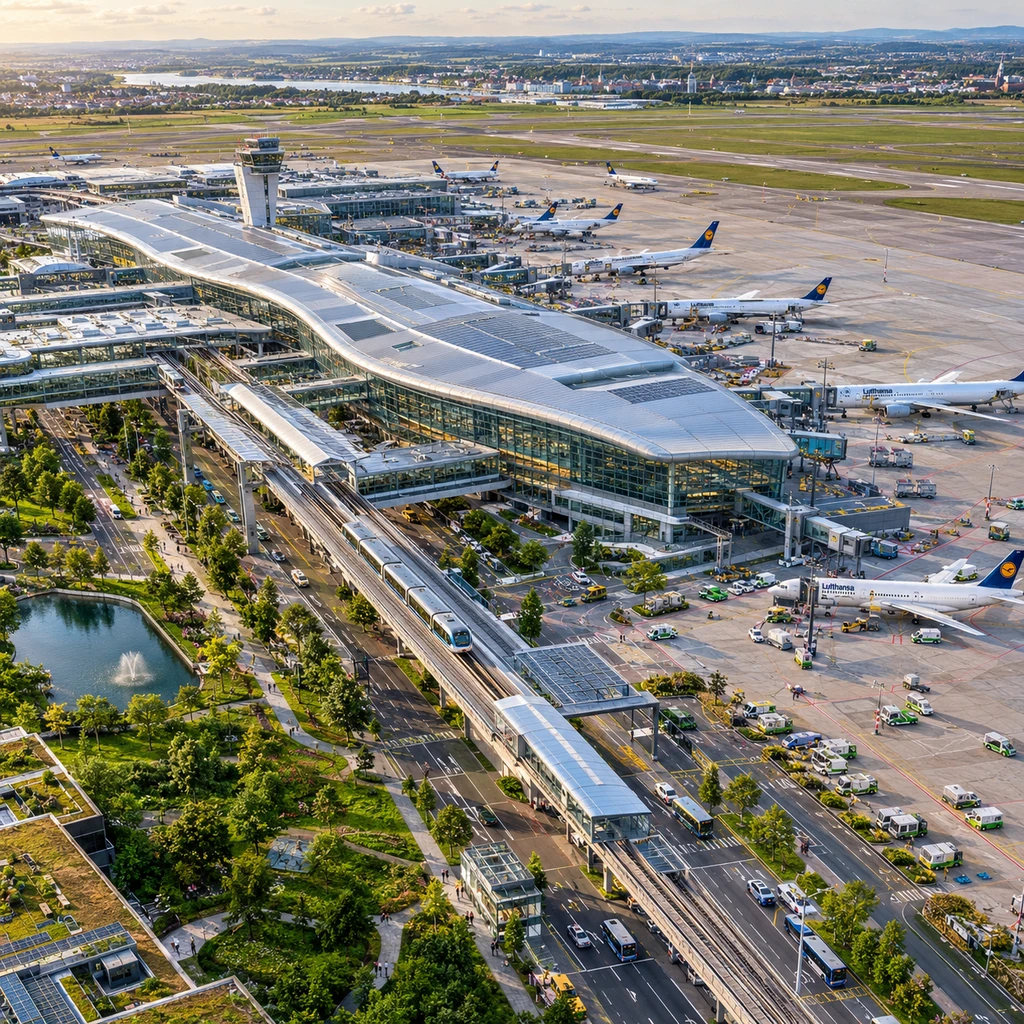
European airports face a practical challenge: accommodating changing travel demand while improving efficiency and cutting environmental impacts. The answer will vary by location. Some airports need terminal upgrades or better rail links; others may have little room to expand or face strong climate and community constraints.
Airport infrastructure projects are therefore becoming more than construction programmes. Their success depends on how well capacity, passenger and baggage processing, ground access, energy use, and local concerns fit together. Expansion is one option, not a guaranteed goal.
Why European Airports Face Pressure to Evolve
European airports face pressure to evolve because passenger flows, ageing infrastructure, and transport connections can strain capacity even when a new runway is not the right answer. Planning must account for demand, operational limits, and the needs of surrounding communities.
Capacity is not simply the number of aircraft an airport can handle. A terminal may become crowded at peak times while runways have spare capacity, or runway schedules may be tight while check-in and security areas operate smoothly. Baggage systems, border controls, aircraft stands, taxiways, and road or rail access all shape the experience and throughput of an airport.
Many European infrastructure projects must also work within dense urban areas, established flight paths, and strict land-use limits. Ageing terminals may need replacement systems, accessible layouts, or energy upgrades. At the same time, changes in travel patterns and airline operations make long-term forecasts uncertain. Building for a single optimistic demand scenario can leave costly assets underused.
That is why planners increasingly need a whole-airport view: identify the actual bottleneck, test different demand scenarios, and compare construction with operational changes. The relevant question is not only how many passengers an airport can serve, but when, how reliably, and at what cost to residents and the climate.
Expansion Beyond Runways and Terminals
Airports can increase capacity through targeted terminal, airside, and ground-access upgrades, even when runway construction is not feasible or justified. The most effective airport expansion projects address the specific constraint that limits the entire system.
Terminal improvements can add usable capacity by redesigning security queues, check-in areas, gates, and passenger routes. Better use of existing space may relieve peak pressure without adding a large new building. Where extra floor area is needed, phased construction can help keep the airport operating, though temporary detours and noise from construction create disruption.
Airside investment matters too. Aprons, aircraft stands, taxiways, and airfield lighting can affect how efficiently aircraft move between runway and gate. Upgrades to these systems may improve resilience or reduce delays, but their value depends on coordination with air traffic management and airline schedules. Increasing one part of the system can simply move the bottleneck elsewhere.
Ground access is another capacity decision. Direct rail or metro services, frequent buses, safe cycling routes, and well-managed drop-off areas can help move more people without requiring every passenger to arrive by car. A useful project test is to ask whether each proposed upgrade will:
- Relieve a measured bottleneck rather than add capacity that cannot be used.
- Connect with the airport’s other systems, including baggage, security, stands, and public transport.
- Allow future changes without locking the airport into one growth forecast.
Choosing a major expansion for speed or scale can mean accepting higher land take, embodied carbon, and construction disruption. Smaller upgrades may have lower impacts, but they can be less effective if demand exceeds the system’s practical limits.
Making Airport Operations More Efficient
Digitalisation and automation improve airport efficiency when they reduce friction across passenger, baggage, and aircraft processes. Technology works best when systems share accurate information and staff can step in when equipment or data fails.
For passengers, mobile check-in, self-service bag drops, biometric processing where legally permitted, and live queue information can make journeys more predictable. These tools can reduce repetitive manual steps, but they do not remove the need for clear signage, accessible alternatives, privacy safeguards, and support for travellers who cannot or prefer not to use digital services.
Baggage operations can also benefit from better tracking and coordination. Shared operational data helps teams spot delays, match bags with flights, and respond to equipment faults. Automation can improve consistency in sorting and handling, but it requires maintenance, cybersecurity planning, and fallback procedures. A highly automated facility with no practical manual backup may be vulnerable to a single system outage.
On the airfield, better scheduling and communication between airport operators, airlines, and air traffic services can help coordinate gates, ground crews, and aircraft movements. Efficiency is not achieved by installing software alone. It requires agreed processes, staff training, and data that teams trust.
A sensible approach is to digitalise the handoffs where delays commonly occur, then measure results such as queue times, baggage disruptions, or turnaround reliability. That keeps technology investment tied to a service problem instead of treating automation as a goal in itself.
Building Sustainability into Airport Projects
Sustainable airport projects combine lower energy demand, cleaner ground operations, and reduced surface-transport emissions. They can reduce an airport’s own environmental footprint, but they cannot by themselves decarbonise aircraft or eliminate the climate impact of flying.
Building design is a starting point. Efficient heating, cooling, lighting, and ventilation can reduce energy use over a terminal’s life. On-site renewable electricity and storage may contribute where site conditions and grid connections allow. These measures need to be designed around operating hours, passenger comfort, and maintenance requirements; a feature that is difficult to operate may not deliver its intended savings.
Airport electrification can cover ground-support equipment, service vehicles, and, where feasible, fixed electrical and pre-conditioned air connections at aircraft stands. It depends on charging infrastructure, grid capacity, equipment availability, and workable charging schedules. Electrifying airport vehicles reduces local exhaust emissions, although the wider carbon benefit depends partly on how the electricity is generated.
Sustainable aviation fuel (SAF) is relevant to the wider aviation transition because it can reduce lifecycle emissions compared with conventional jet fuel, depending on its feedstock and production pathway. Airports may support its availability through fuel infrastructure and coordination with suppliers and airlines. However, SAF supply, cost, and lifecycle performance remain important constraints. It is not a substitute for reducing avoidable energy use or improving airport operations.
Projects should distinguish airport-level measures from sector-wide changes. Airports can improve buildings, ground fleets, and access to the site; aircraft technology, flight operations, fuel production, and airline choices require action across aviation. Clear accounting helps prevent a local emissions improvement from being presented as a solution to the whole sector’s climate impacts.
Balancing Growth with Local Impacts
Airport growth is sustainable only when its benefits and burdens are assessed alongside land use, noise, emissions, and local transport. Community consultation should shape project choices early, before major decisions become difficult to change.
Noise affects residents differently depending on flight paths, time of day, and the character of the neighbourhood. Measures may include quieter ground equipment, improved insulation support, operating procedures, and transparent monitoring. These steps can reduce specific impacts, but they cannot make aircraft noise disappear. Changes to routes or schedules may also shift the burden from one community to another.
Surface transport deserves the same attention as activity on the airport site. If passenger growth mainly adds car journeys, road congestion and emissions can offset some gains from efficient terminal design. Reliable rail and bus services, useful connections for airport workers, and safe walking or cycling routes can widen access while reducing dependence on private cars. They require investment and coordination with local and regional transport authorities.
Community consultation is most useful when it happens before project details are fixed. Residents, local businesses, workers, and municipalities should be able to review the evidence, raise concerns, and understand which changes are possible. Consultation cannot guarantee agreement, but it can reveal practical problems, improve mitigation, and clarify trade-offs. Land acquisition and habitat impacts also need careful assessment, especially where expansion reaches beyond an existing airport footprint.
For a balanced decision, compare not only construction costs and passenger capacity, but also noise exposure, access options, emissions, land use, and the consequences of doing nothing. In some locations, better rail connections or operational changes may be preferable to expansion. In others, upgrading infrastructure may be necessary to maintain reliable service.
What the Next Generation of European Airports May Look Like
The next generation of European airports will likely combine adaptable terminals, better-connected transport, digital operations, and lower-emission ground systems. Their design should preserve options as demand, technology, energy supply, and climate requirements change.
Instead of treating expansion as a single leap, planners can stage investments around verified needs. A terminal upgrade might come first, followed by baggage improvements or a new public transport connection if monitoring shows the need. This approach can limit early spending and make it easier to adjust plans, although phased work may extend construction and require repeated operational changes.
Resilience also means preparing for heat, flooding, water stress, and power interruptions. Airport operators can assess vulnerable assets, protect critical systems, and plan continuity for passengers, staff, and aircraft operations. A resilient airport is not simply one with more infrastructure; it is one that can keep essential services functioning and recover when conditions change.
Four questions can guide future airport projects:
- Capacity: Which part of the airport is genuinely limiting performance?
- Efficiency: Can a process change or digital tool solve the problem before construction?
- Sustainability: Which impacts can the airport control, and which require wider aviation action?
- Local value: How will the project affect residents, workers, and regional transport?
Frequently asked questions
How can airports increase capacity without building a new runway? They can improve terminal layouts, security and baggage processing, aircraft stands, taxiways, schedules, and public transport access. The right solution depends on the bottleneck; a terminal upgrade will not resolve a runway constraint.
What makes an airport expansion project more sustainable? A project can reduce impacts by reusing existing sites where practical, designing efficient buildings, electrifying ground equipment, improving public transport, and measuring land, noise, and emissions effects. No single measure addresses every impact.
How can digitalisation improve airport efficiency? Digital tools can coordinate passenger processing, baggage tracking, gates, and ground operations. Benefits depend on reliable data, staff training, privacy protection, cybersecurity, and backup procedures.
Why is public transport important to airport development? Rail, metro, and bus links can move passengers and airport workers while reducing pressure on roads and parking. Their usefulness depends on service frequency, affordability, operating hours, and connections with the wider region.
European airport development will be strongest when infrastructure investment follows a clear need and remains accountable to environmental limits and local priorities. Capacity, efficiency, and sustainability are connected decisions; planning them together gives airports a better chance of serving travellers without passing hidden costs on to surrounding communities.